
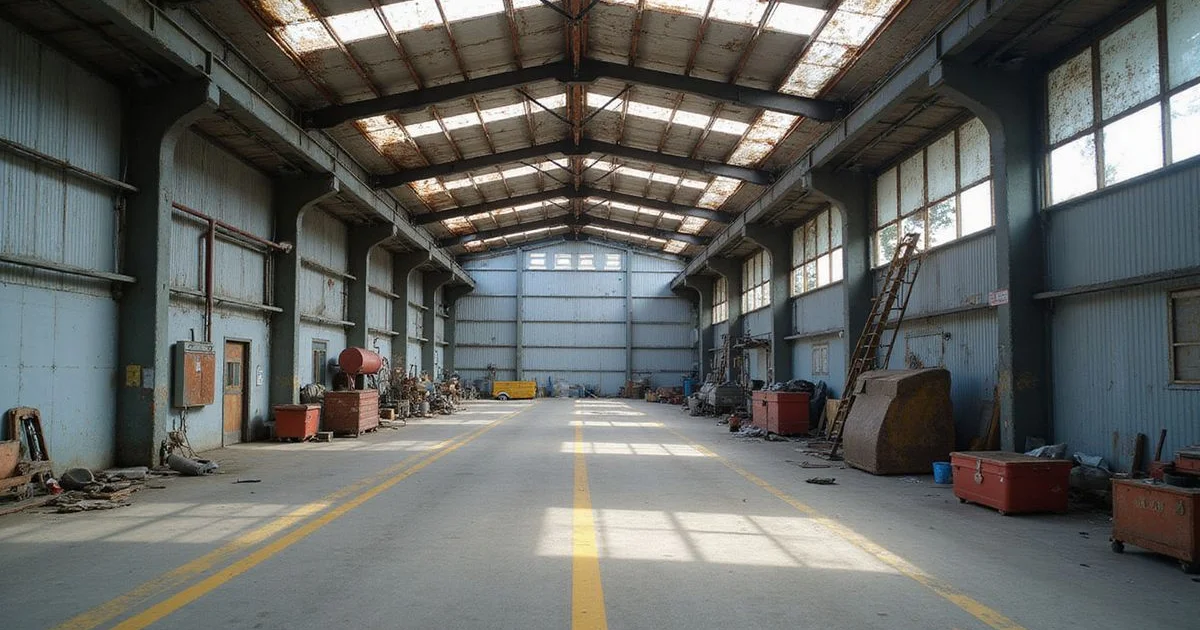
Ageing Factories Show It in the Roof and Floor
A leaking roof and a cracked floor usually mean the building has aged past patching, but not always past saving. The cause decides whether you repair, replace or rebuild.
Older factories in estates like Shah Alam, Balakong and Cheras often reach this point. The roof leaks every monsoon and the floor is cracked in the busiest aisles. Patching works for a while, then the problems come back.
The timing matters. According to the New Straits Times, MetMalaysia expects the 2026/2027 Northeast Monsoon to bring three to five episodes of continuous heavy rain between November and January. Malay Mail reports that Selangor has mobilised 7,677 personnel for a season expected to run until March 2027.
So the real question is how far to go: repair, replace, or rebuild.
Factory Builder Malaysia is the factory and warehouse building arm of QDB Ventures Sdn Bhd, a Cheras-based contractor that builds in Selangor, so we see this decision often. This guide supports our factory renovation service, where our engineers assess the building before recommending anything. Below, we cover why roofs leak, when to replace the roof and insulation, why floors crack, when to recast, and when an old factory upgrade should become a rebuild.
Why Factory Roofs Leak
Most factory roof leaks start at the fixings, laps, gutters and flashings, not in the middle of a sheet. QingLong Waterproofing Malaysia makes the same point in its metal roof guidance. These are the usual culprits:
- Corroded sheets: older metal roofing loses its coating and rusts through
- Failed laps and fixings: screws loosen and washers perish, letting water in at every fixing
- Gutters: blocked, undersized or sagging gutters overflow into the building
- Flashings: gaps around skylights, vents and wall junctions
- Movement: structural movement opens joints in the roof
Heavy tropical rain finds every weak point, so a roof that is slightly worn can leak badly. QingLong notes that metal roofs in Malaysia expand under strong sun and contract after heavy rain. That daily cycle works fixings loose, and a typical roof has thousands of them.
Here’s the pro tip. The drip you see inside is rarely under the hole. QingLong advises starting any repair by finding where the water actually enters, rather than sealing the spot where it shows up.
Roofing and Insulation Replacement
When leaks are widespread, replacing the metal roofing is usually better value than chasing each leak. A full factory roof replacement is also the moment to add or upgrade roof insulation, which reduces heat inside the building and can improve working conditions.
The numbers explain why. Clickbina’s 2026 Klang Valley guide puts fastener, lap and flashing repairs at RM500 to RM2,500 per job, and rust-seal coating at RM5 to RM12 per sq ft. Roofing Man’s 2026 breakdown lists new metal sheets at RM6 to RM12 per sq ft, with insulation at RM2 to RM6 and labour at RM3 to RM6.
| Option | Indicative cost (Klang Valley) |
|---|---|
| Fastener, lap or flashing repair | RM500 to RM2,500 per job |
| Replace a few sheets | RM1,000 to RM2,500 |
| Rust-seal coating | RM5 to RM12 per sq ft |
| New metal sheets | RM6 to RM12 per sq ft |
| Insulation | RM2 to RM6 per sq ft |
| Labour | RM3 to RM6 per sq ft |
Treat these as rough guides, not quotes. Factory spans, roof height and access change the price. The gap between coating and replacing is also narrower than most owners expect, so coating only pays off when the sheets are still sound.
On insulation, factory-bonded panels are one option. Thung Hing’s TH Rib 30 PU Foam roofing, for example, bonds CFC-free polyurethane foam to the metal sheet, and the manufacturer says it reduces heat transfer.
The roof structure should be checked at the same time, especially for corroded purlins. Ask whoever quotes you whether the structure was checked against MS 1553, Malaysia’s code of practice for wind loading on buildings. New sheets are only as secure as the steel they are fixed to.
Why Factory Floors Crack
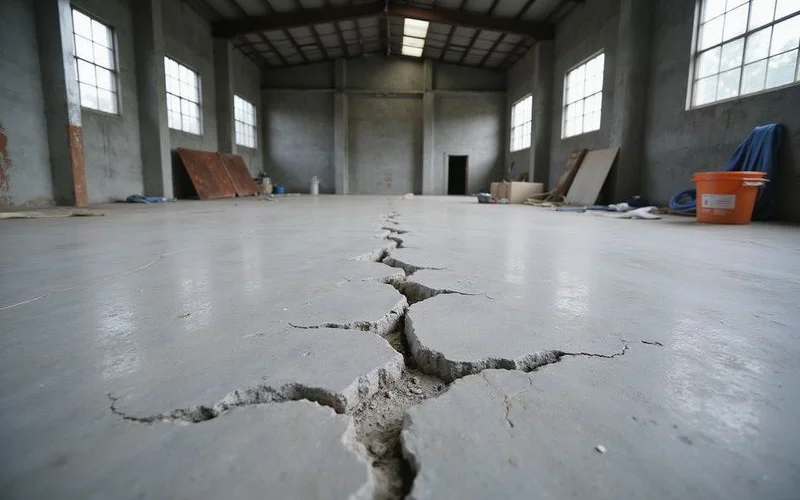
Factory floors crack for four main reasons: shrinkage, overloading, poor ground and joint failure. The pattern of the crack usually tells you which one you’re dealing with.
| Cause | Typical sign |
|---|---|
| Shrinkage | Fine cracks, often in a pattern, early in the slab’s life |
| Overloading | Cracks under racking legs, machinery or forklift routes |
| Poor ground or sub-base | Settlement, uneven floors, cracks that grow |
| Joint failure | Broken edges where forklifts cross joints |
Drying shrinkage comes from moisture leaving the concrete, as a KB Engineering article on ForConstructionPros explains. It also shows how excessive shrinkage combined with wide joint spacing can produce cracks that wander outside the joints.
Slab thickness is the other number worth checking. A US contractor guide from Local Concrete Contractor suggests 6 to 8 inches (roughly 150 to 200 mm) for standard warehouse duty, and 8 to 10 inches (roughly 200 to 250 mm) for heavy forklift or truck loading. Your engineer designs to your real loads, but the range shows how a slab built for light use struggles under today’s racking and forklifts.
Floor Repair vs Recast
Seal fine shrinkage cracks and repair damaged joints. Recast the floor where it is overloaded or the ground beneath has settled, because surface repairs will not last there.
- Seal: fine shrinkage cracks that are not moving
- Repair: broken joint edges where forklifts cross
- Recast: overloaded or settled areas, broken out and cast again
A factory floor recast is often a good moment to fix what caused the failure. That can mean better ground preparation or a thicker slab designed for the real loads.
For joints, US flooring contractor High Stakes Epoxy specifies a semi-rigid polyurea joint fill for heavy forklift floors. It lets the joint flex with thermal movement while still supporting wheel loads.
Find the cause before you fix the crack
A crack is a symptom. Repairing the surface without fixing the cause usually means the crack returns.
When Upgrade Becomes Rebuild
Rebuild when repairs would cost a large share of a new building, or when the structure itself is failing. Rebuilding is worth considering when:
- Repairs would cost a large share of a new building
- The structure itself is corroded or failing
- The building is too low, too small or badly laid out for your operation
- You also need more floor area, which an old structure cannot carry
Here’s a quick way to compare the three routes.
| Route | Fits when |
|---|---|
| Repair | Leaks are isolated and floor cracks are fine or stable |
| Replace | Roof sheets are widely corroded, or floor areas are overloaded or settled |
| Rebuild | The structure is failing, or the layout and size no longer suit you |
If you own the land, a rebuild is also a paperwork job before it’s a construction job. FactoryHub’s approvals guide says a new factory in Selangor needs council planning permission, building plan approval through the One Stop Centre, then a CCC, TNB supply, Bomba approval and DOE clearance. Start early, because those steps sit between a decision and a first day on site.
Our guide on whether to extend your factory or build new helps with that decision.
Getting an Honest Assessment
Send us photos of the roof and floor problems and a rough description of the building. Our engineers inspect, find the causes and recommend repair, replacement or rebuild, with the reasons written down.
Good photos speed things up:
- Roof: ceiling stains, gutters, and close-ups of fixings and laps
- Floor: each crack with a ruler or coin beside it for scale
- Building: its age, and the racking, machinery and forklift routes it carries
For factory roof leak and floor crack repair, the right answer depends on the cause, not the symptom.
Send your photos today and we’ll tell you honestly whether to patch, replace or rebuild.