What Are Civil and Infrastructure Works?
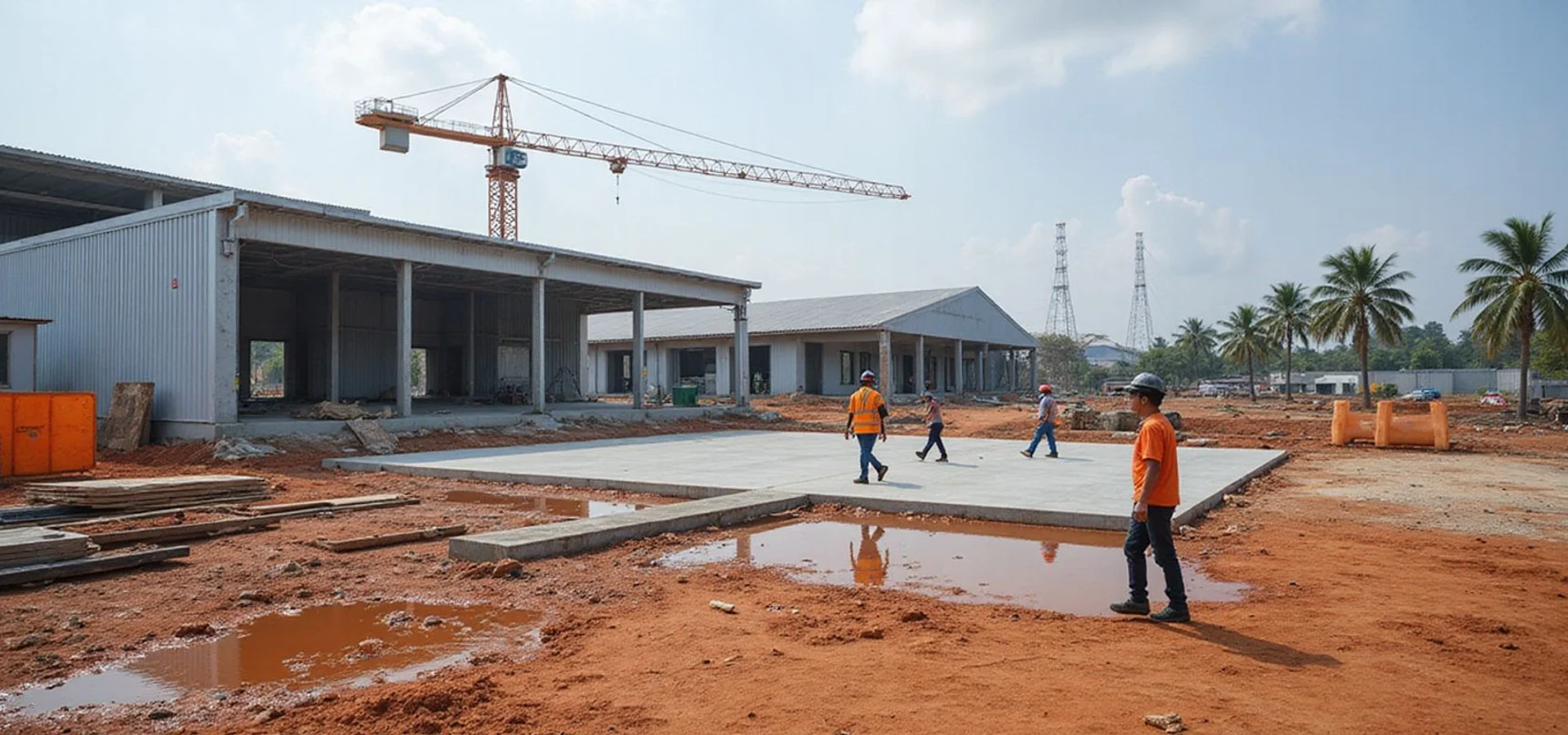
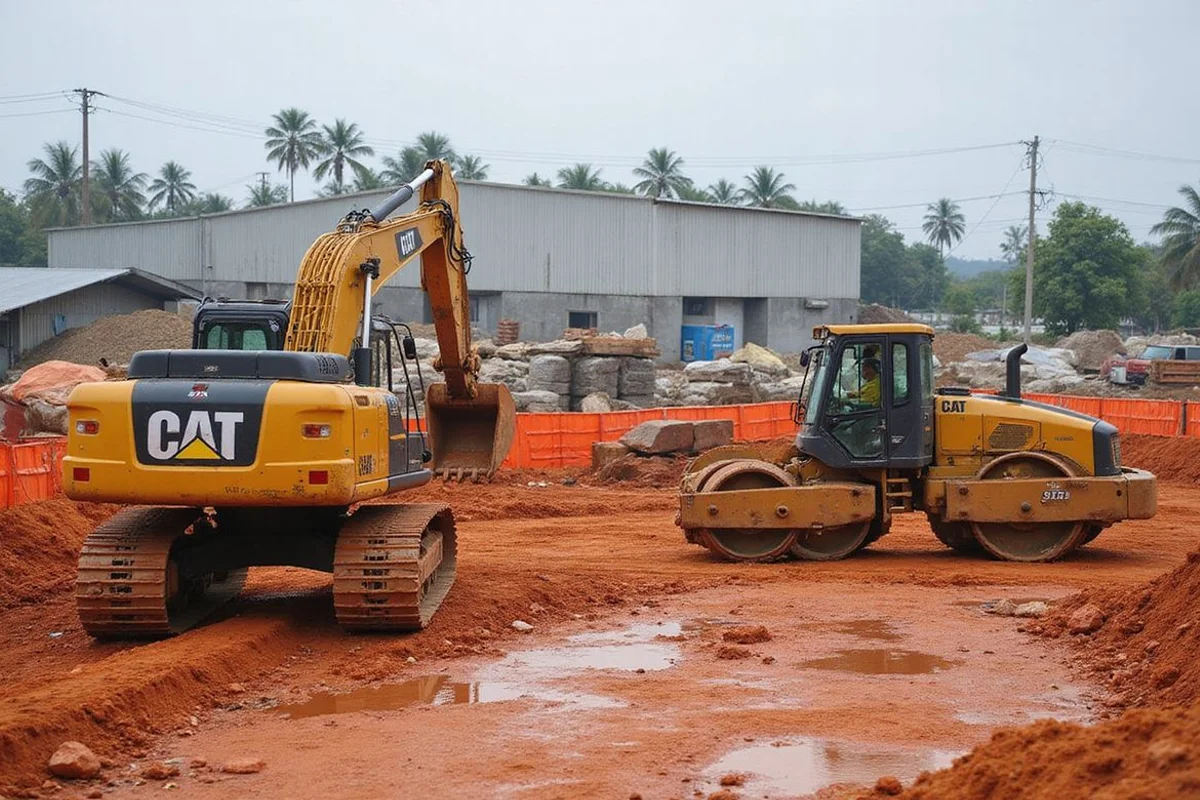
In any factory construction project in Selangor, civil and infrastructure works prepare the site and everything around the building: earthworks, drainage, roads and hardstanding. Ground conditions change these works a great deal.
Soft coastal clay around Klang makes soil investigation and piling important. Engineers at Gue & Partners, writing about a large Bukit Tinggi development in Klang, described very soft to firm silty clay reaching 25 to 30 metres deep. Hillier ground around Rawang makes earthworks and drainage a bigger part of the job.
We plan external areas for the lorries and containers that will use them. Drainage is then set to suit the council’s requirements for your site.
Why Does the Ground Matter So Much?
Everything above ground depends on what is below it.
- On soft ground, piles carry the building down to firmer layers, with pile caps linking piles to the columns. The soil investigation sets the depth and number of piles. Read soil investigation and piling to see how this shifts a budget.
- On sloping ground, cut and fill forms the platform. Where the platform meets higher or lower ground, you need slopes or retaining structures, and drainage has to handle faster runoff.
- On any site, the floor slab and yard need a prepared base, or they will crack and settle. A Tensar case study from the Axis Mega Distribution Centre in Selangor shows the idea. A stabilised layer under the perimeter road helped limit uneven settlement on thick soft clay.
| Ground | Main works | What sets the design |
|---|---|---|
| Soft ground, such as coastal clay around Klang | Piling and pile caps | Soil investigation results |
| Sloping ground, such as parts of Rawang | Cut and fill, slopes or retaining structures, drainage | Platform levels and runoff |
| Any site | A prepared base under the slab and yard | Loads from lorries, forklifts and racking |
How Do We Plan Drainage and Retention?
Industrial sites usually need a planned drainage system. It takes water off the roof, the yard and the platform, and carries it into the council drain.
Larger or sloping sites may also need a retention pond to slow runoff. Malaysia’s stormwater manual, MSMA (Manual Saliran Mesra Alam), now in its second edition, favours this approach. It controls water on site with detention ponds, swales and similar measures instead of sending it away as fast as possible.
You will see the same thinking in the paperwork. The drainage submission form used by MBSP in Shah Alam asks for a stormwater master plan showing main drains, flow direction, outlets and any detention or retention facilities.
We design drains, falls and retention together with the platform levels and roads, so they work as one system. See drainage and retention ponds on industrial land.
What About Roads and Hardstanding?
Yards take heavy punishment from prime movers, trailers and forklifts. We set the pavement build-up for the loads, the turning radius for your vehicles, and the falls so water drains away.
Malaysia’s JKR pavement method starts from traffic volume and equivalent standard axle loads. It then checks the strength of the ground beneath to set the thickness. So the more clearly you can describe your daily lorry movements and vehicle types, the better the yard design.
Container lorry access is planned together with the loading bays. See factory roads and hardstanding.
Common Problems We Solve
- Unexpected piling costs, reduced by commissioning soil investigation early.
- Flooded yards and loading bays, avoided with proper falls and drain sizing.
- Cracked, rutted yards, avoided with pavement designed for the actual loads.
- Lorries that cannot turn, avoided by planning access with the building layout.
How Are Site Works Priced?
Civil works are quoted with the rest of the project, after the brief and, ideally, the soil investigation. Where quantities depend on ground conditions, the quotation marks them as provisional. It also explains how they will be measured and agreed.
We do not publish prices or rates. Send us your lot details and your brief, and we’ll tell you what we’d check on the ground first.