
What Does a CCC Certify?
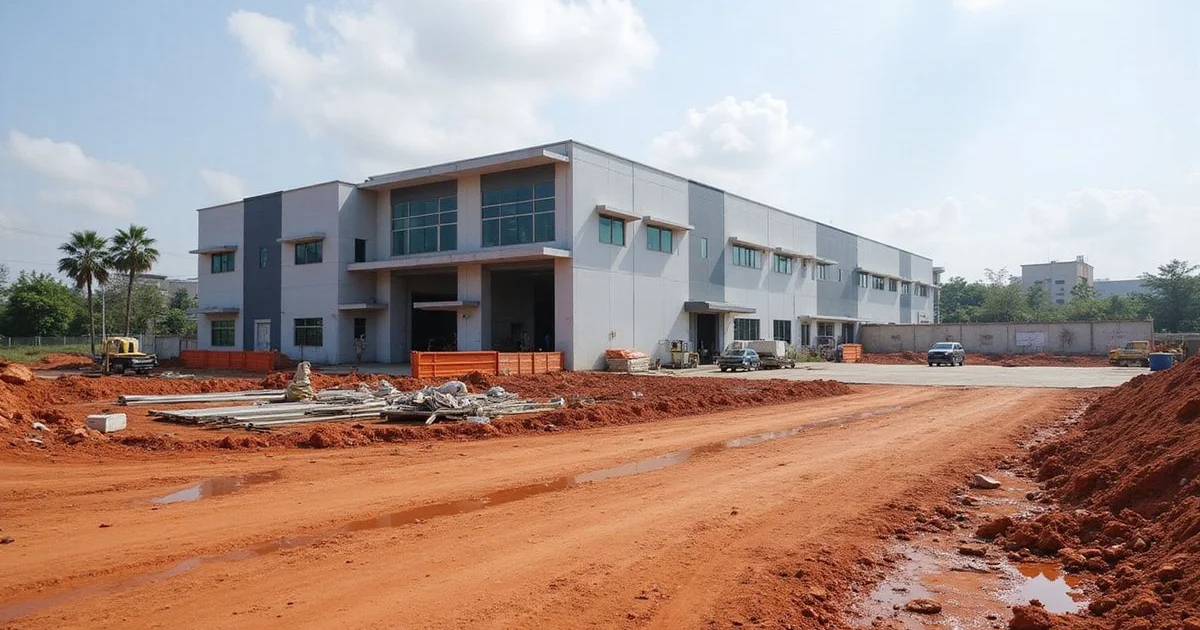
The Certificate of Completion and Compliance (CCC) says a building is finished and complies with its approved plans. For a new factory, it is the last formal step before you move in. It confirms that the structure, the fire safety provisions and the key services were built as approved, and that the relevant agencies have signed off their parts.
We’re Factory Builder Malaysia, the factory and warehouse building arm of QDB Ventures Sdn Bhd, a Cheras-based contractor that builds in Selangor. A CCC for a factory in Malaysia is something we plan around from day one.
If you are planning factory construction in Selangor, understand the CCC from the start. The way the building is designed and built decides how smoothly it is issued at the end.
The CCC Replaced the Old CF
Yes, the CCC replaced the old certificate, formally called the Certificate of Fitness for Occupation (CFO), which the local council used to issue. According to the Malaysian Bar, the change came with the Street, Drainage and Building (Amendment) Act 2007, which took effect on 12 April 2007.
The council no longer signs off your building. Qualified professionals do. That puts more responsibility on the people who design and supervise it, and it’s why your choice of professional matters.
Who Issues the CCC?
The CCC is certified by the principal submitting person (PSP), the qualified professional who submitted the building plans. This is usually an architect or a professional engineer. They supervise the works and certify completion and compliance at the end.
Here’s what the PSP handles on your behalf:
- Supervising the works from start to finish
- Collecting stage certifications from the contractor and other professionals. The Board of Engineers Malaysia says these come as 21 forms, Form G1 to G21
- Signing Form F, which is the CCC itself. Only the PSP can sign it
- Depositing copies of the certificate and the Form Gs with the local authority and the relevant professional board within 14 days, as By-law 25(3) of the Uniform Building By-Laws 1984 requires
- Issuing a partial CCC (Form F1) if the project finishes in phases
This is why the PSP’s role matters so much. Under By-law 25(2), the PSP accepts full responsibility and certifies that the building is safe and fit for occupation. They’re signing their name to the fact that the building matches what was approved.
Late changes are the enemy of a smooth CCC
A change made on site without updating the approved plans can hold up the CCC. Decide early, and record any change properly.
A 2026 guide from FactoryHub points out that deviating from approved plans without the council’s written permission is a separate offence under section 70(13) of the Street, Drainage and Building Act 1974. The fine can reach RM50,000, with up to three years’ jail.
The Clearances Behind the CCC
Before the CCC can be issued, the agencies responsible for each part of the building must be satisfied. For a typical factory, these include:
| Agency | What they clear |
|---|---|
| TNB | Power supply connection and any substation |
| Air Selangor | Water supply connection |
| Indah Water | Sewerage connection |
| Telekom Malaysia | Telecommunication connection |
| Bomba | Fire safety: escape routes, hydrants, hose reels, sprinklers where required |
| Council departments | Roads, drainage, landscaping and other conditions |
Each clearance depends on the matching part of the building being designed and built correctly. Fire safety is a common sticking point, which is why we raise Bomba requirements during detailed engineering. Our guide on what Bomba, DOE and DOSH need from a new factory covers this.
One distinction trips up first-time owners. The CCC is not Bomba’s fire certificate (Perakuan Bomba). According to Industrial Malaysia, you apply for the fire certificate after the CCC is issued, and Bomba asks for a copy of the CCC. FactoryHub adds that the fire certificate must be renewed every year.
Why Occupation Waits for the CCC
Occupation should wait for the CCC, even when the roof is on and a lease is ending. It’s tempting to move machinery in early. Without the certificate, you may face problems with:
- Utility connections, which may not be fully energised or connected
- Insurance, which may not cover an uncertified building
- Licences for your business at the premises
- Financing, if a bank needs the CCC before releasing funds
The law is firm too. Under section 70(27) of the Street, Drainage and Building Act 1974, occupying a building without a CCC can lead to a fine of up to RM250,000, up to 10 years’ jail, or both. The Malaysian Bar notes that this can reach owners, tenants and other occupiers.
If your timeline is tight, build the CCC into the programme from the start rather than hoping to squeeze it in at the end. A phased build can help. Ask your PSP about a partial CCC (Form F1), though the Board of Engineers Malaysia says the PSP needs the local authority’s permission to use that form. Our guide on how long it takes to build a factory explains how the stages fit together.
How the CCC Fits the Approval Path
The CCC is the final step in a sequence that starts with planning permission and building plan approval. Our guide to factory building approvals in Selangor walks through that sequence in order.
When you appoint a contractor, ask these questions up front:
- Who will be the principal submitting person?
- Who is responsible for each agency clearance?
- Who collects and files the stage certifications (Form G)?
- Will the project need a partial CCC for phased handover?
Our quotations state these responsibilities in writing, so you know exactly who is handling what on the way to the CCC. Send us your land details and we’ll show you how it would work for your factory.