
Why There Is No Single Answer
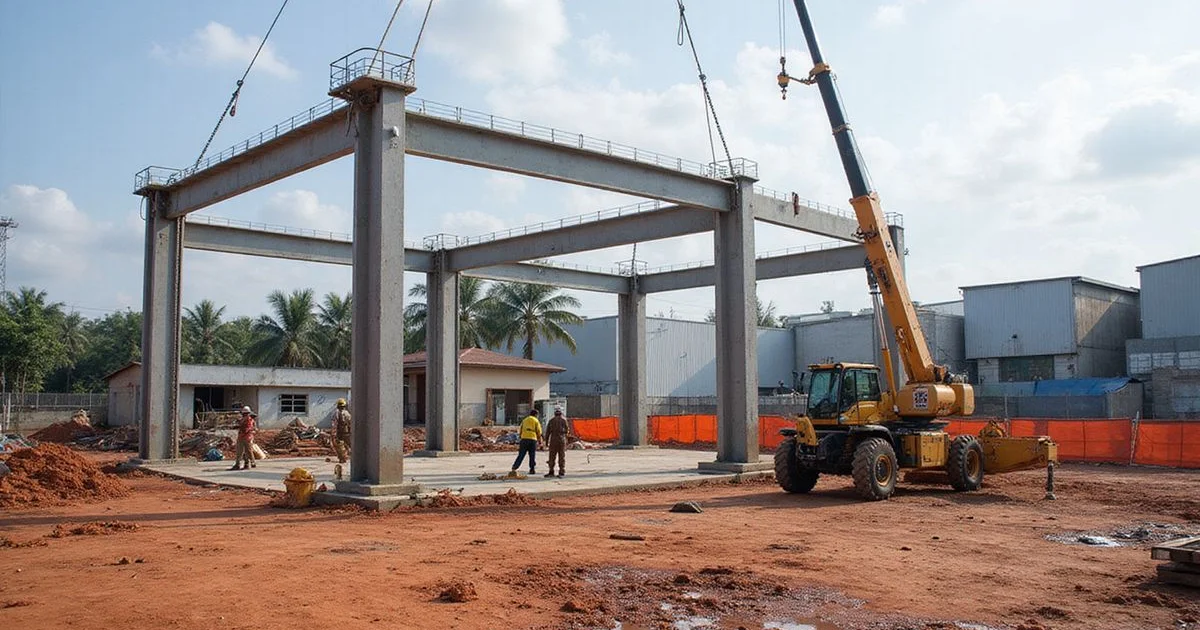
If you’re asking how long to build a factory in Malaysia, the honest answer is a wide range. SJEC, a Malaysian industrial contractor, says factory construction can take anywhere from 8 to 24 months, depending on complexity.
The question usually arrives with a deadline attached: a lease is ending or a production date is fixed. At Factory Builder Malaysia, the factory and warehouse arm of Cheras-based contractor QDB Ventures Sdn Bhd, we hear it before almost anything else. The answer depends on the site, the approvals and the scope.
A small extension on firm ground is a very different job from a large warehouse on soft clay near Klang.
Port Klang is a good example. One FactoryHub guide flags soft marine clay along the coast, and it puts the whole journey from land purchase to operating factory at roughly 18 to 30 months, longer if soil improvement is needed.
We can’t give you a fixed number, but we can explain the sequence of stages, what each one depends on and what usually causes delays. If you are planning factory construction around a date, this is the most useful way to think about time. Here’s what we’ll cover:
- The eight stages from brief to CCC
- The four causes of delay we see most
- How your target start date shapes the plan
- Why we don’t quote durations before the brief
The Stages From Brief to CCC
Eight stages run from brief to CCC, and approvals plus construction take the biggest share of the calendar.
- Brief. You share the site, land area, building size, use, drawings, approval status, budget and target start date.
- Planning. The scope is reviewed and the construction plan and budget are prepared.
- Design. Layout, elevations and specification are developed and signed off.
- Detailed engineering. Piping, mechanical and electrical design, plus structure and civil works.
- Quotation. Inclusions, exclusions and responsibilities are listed in writing.
- Approvals. Planning permission (Kebenaran Merancang) and building plan approval through the council’s One Stop Centre.
- Construction. Site works, foundations, structure, roof, services and finishes.
- CCC and handover. Agency clearances, certification and handover.
The CCC (Certificate of Completion and Compliance) has been the occupation certificate since 12 April 2007, when it replaced the council-issued CF. According to FactoryHub, a Principal Submitting Person issues it (an architect, engineer or registered building draughtsman), and occupying a building without one is an offence under the Street, Drainage and Building Act 1974. Bomba’s fire certificate comes after the CCC, and Industrial Malaysia notes that factories above 2,000 square metres with automatic sprinklers need one.
Published ranges give a feel for where the months go. Treat them as guides, because councils and sites differ.
| Stage | Published range | Source |
|---|---|---|
| Planning permission | 6 to 12 weeks | Terra Group |
| Building plan approval | 6 to 12 weeks, depending on revisions | Terra Group |
| Construction (build-to-suit) | 6 to 12 months | Hartamas Industrial Property |
| Construction (Port Klang) | 12 to 18 months | FactoryHub |
| TNB supply with a new substation | 3 to 12 months | FactoryHub |
| Bomba fire certificate (after CCC) | Within 5 days of payment, once inspection passes | Industrial Malaysia |
What Causes Delays?
Late engineering decisions, ground conditions, council timing and mid-build changes cause most factory construction delays. Most delays come from this short list.
| Cause | Why it adds time | How to reduce it |
|---|---|---|
| Late engineering decisions | Redesign and resubmission | Decide machinery and process early |
| Ground conditions | Extra piling or earthworks | Commission soil investigation early |
| Council and agency timing | Each round of comments adds time | Submit complete, coordinated drawings |
| Changes during construction | Rework and updated approvals | Sign off design before building |
Late engineering decisions are the most avoidable. When machinery is chosen after the building is designed, floors get cut, drains rerouted and cables upsized. Our guide on why machinery must be decided early explains how to avoid it.
Ground conditions bite hardest around Klang. A 2016 paper from the Geotechnical Engineering Branch of Public Works Department Malaysia studied staff quarters at Hospital Tengku Ampuan Rahimah in Klang. It found that ground instability during construction caused both delay and cost overrun.
Council timing is the other big variable. An academic case study of the Subang Jaya Municipal Council’s One Stop Centre found most respondents understood a first check of 14 days, a committee hearing within 30 days, and up to 60 days for the applicant to return amended plans. That last window sits with your design team, so quick, complete replies matter.
The fastest projects are decided early
Time spent getting the brief, the machinery and the ground right at the start usually saves more time later than any shortcut on site.
How Your Target Start Date Shapes the Plan
Give us your target start date with the brief. We work backwards from it to see when design, engineering and submissions need to happen, and we tell you plainly if the date is realistic. If it is not, we explain which stages are under pressure and what could help, such as overlapping design and engineering under design and build.
Some clocks run on their own, so they go on the calendar first:
- TNB power: FactoryHub quotes 3 to 12 months for a 400V supply that needs a new substation. That spread is why we ask about machinery load in the brief.
- DOE notice: The Department of Environment needs 30 days’ written notice before work on emission or effluent sources.
- Zoning check: Terra Group puts a zoning confirmation letter at about 1 to 2 weeks.
- Fire certificate: Bomba’s certificate is applied for after the CCC, so it sits at the very end of the programme.
Approvals Set Their Own Pace
Council and agency timing is outside the contractor’s control. Requirements and processing differ between MBSA (Shah Alam), MBDK (Klang), MPKj (Kajang) and MBSJ (Subang Jaya).
In Selangor, planning permission normally comes first. Building plan approval follows, and it checks the building itself against the Uniform Building By-Laws. FactoryHub notes there is no Selangor-wide processing time, so ask the council’s One Stop Centre for an estimate when you submit.
The best way to protect your programme is to submit complete, well-coordinated drawings. Our guide to factory building approvals in Selangor covers the sequence.
Why We Do Not Promise Durations Upfront
A duration quoted before the brief is reviewed is a guess, and guesses tend to be optimistic. The 8 to 24 month spread SJEC quotes shows how far apart two honest answers can be.
We prefer to build the factory project programme once we know your site, scope and approvals route, and then keep you updated throughout construction. That way, the dates you plan around come from your project, not someone else’s.
If you are weighing whether to extend your current building or build new, timing is often part of the decision. Our guide on build, buy or rent a factory looks at the options.
So, how long to build a factory in Malaysia on your land? Send us your brief and target start date, and we’ll tell you plainly what’s realistic, stage by stage, and flag likely factory construction delays before they cost you.