
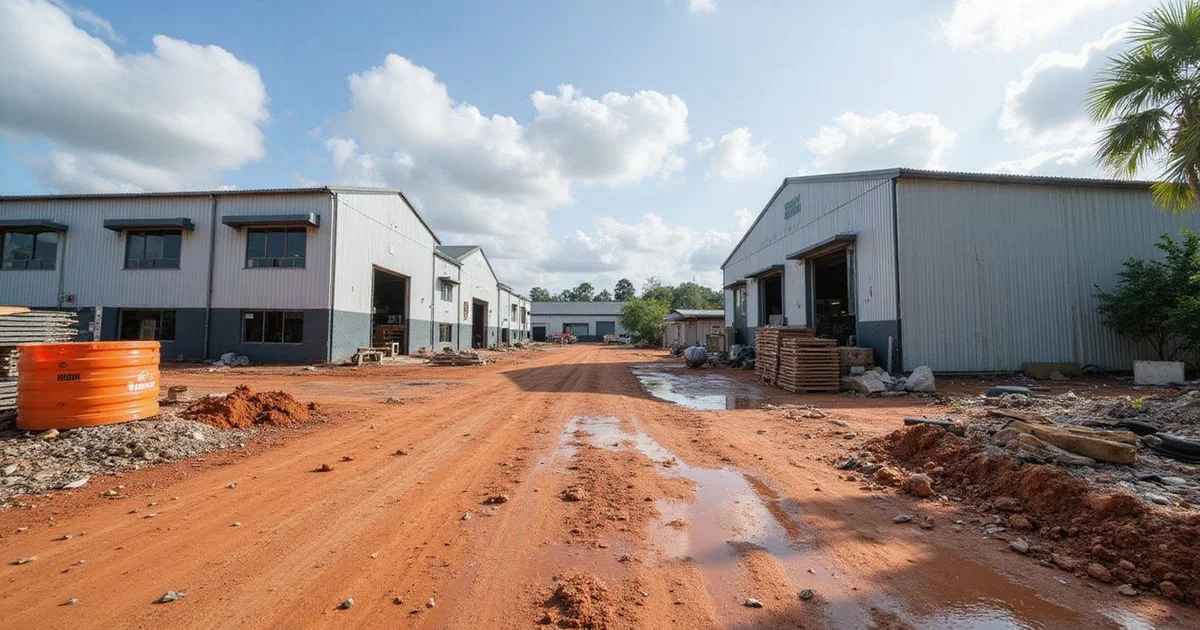
Your factory is full, orders keep coming, and the lot now decides what happens next. You can extend the building you have, or build new, either on spare land you own or on a new lot.
Both can work.
The “extend factory or build new” answer rarely starts with budget. It starts with four checks, and each one comes from the site, not the spreadsheet:
- Land left on the lot: setbacks, plot ratio and site coverage
- Old structure: whether the existing frame can take more load
- Disruption: building beside live production, or planning a move
- Long-term fit: whether the layout will still suit you in years
We’re Factory Builder Malaysia, the factory and warehouse building arm of QDB Ventures Sdn Bhd, a Cheras-based contractor building in Selangor. Extension work sits with our factory extension service, and new builds cover the other route. Below, we compare these factory expansion options one by one, then put them side by side with Selangor cost and approval numbers.
Land Left on the Lot
Start with the land. Check how much of the lot is already built on, and how much more the setbacks, plot ratio and site coverage allow. On older built-up lots, such as many in Shah Alam’s sections, the answer may be very little.
Here’s what each term means in plain language:
- Setbacks: the gaps you must keep between the building and the lot boundaries
- Plot ratio: the total floor area allowed compared with the size of the lot
- Site coverage: how much of the lot the building footprint may cover
If the lot is near its limits, an extension may only add a mezzanine or a small bay. Even that needs approval. According to Terra Group’s guide to factory approvals in Selangor, the local council’s planning permission (Kebenaran Merancang) approves the site layout and where the building sits, and building plan approval comes before any extension work.
Pull your approved plans from the council before you design anything. Unapproved mezzanines and extensions are a known cause of compliance problems, so a gap between what’s on site and what’s on the drawings is better found now than at submission.
Structural Capacity of the Old Building
An extension joins an existing structure. If that structure is old, corroded or was never designed for more load, tying into it costs more and may need strengthening. Low eaves can limit what an extension can match. Our engineers check the existing frame and footings first.
Paperwork matters here too. A Certificate of Completion and Compliance (CCC) confirms a building was completed to its approved plans and is safe to occupy. FactoryHub notes that a missing CCC on a factory often points to unapproved extensions, so check whether yours covers every later addition.
If it doesn’t, expect regularisation to be part of the extension submission.
Disruption
Extending usually means building next to a running operation, which needs phasing, separation and care. A new building on separate land avoids that, but you then have a move to plan. Our guide on extending while production continues explains what working next to an operation involves.
If you’re weighing whether to relocate the factory or extend, this is usually where the two options differ most:
- Extend: phasing, a separated work zone and extra care around live machines and forklifts
- Build new on land you own: no live-site conflict, but a move to plan
- Build new on a new lot: the same move, plus time to buy and approve the land
Check the zoning on that spare land too. Terra Group estimates that converting agricultural or residential land to industrial use (Tukar Syarat) takes 3 to 6 months, and that clock runs before any building starts.
Long-Term Fit
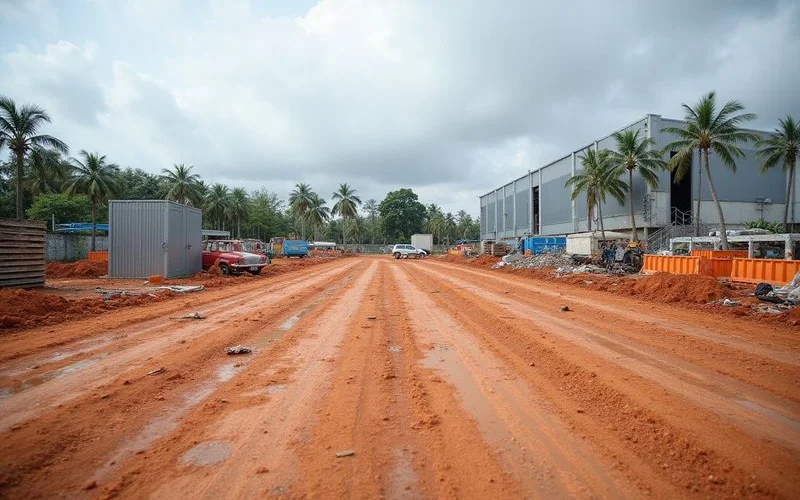
The biggest question is whether the current building will still suit the business in years to come. If the layout, height or floor no longer fit your process, an extension adds space but keeps the old problems. A new building can be designed around how you work now and how you plan to grow.
Build cost per square foot gives you a fair starting point. Terra Group’s 2024 guide to factory construction in Malaysia put the ranges at:
- Basic factory: RM120 to RM200 per sq ft
- Mid-range factory: RM200 to RM350 per sq ft
- High-specification factory: RM350 to RM600+ per sq ft
Extension costs sit on top of those rates once tie-ins, strengthening and phasing come in. A new build lets you pick the specification from the start.
Side-by-Side Comparison: Factory Extension vs New Build
Here’s how a factory extension vs new build looks on the factors that usually decide it.
| Factor | Extend | Build new |
|---|---|---|
| Land needed | Room left on current lot | Spare land or new lot |
| Structure | Ties into old building | Designed fresh |
| Disruption | Works next to operation | Move to plan |
| Layout fit | Keeps existing layout | Built around current needs |
| Approvals | Extension submission, maybe regularisation | Full new-build approvals |
| Fire certificate | Extra floor area may bring the building under Bomba’s yearly rule | Fire drawings endorsed by Bomba at plan stage |
On the fire row, size is the trigger to watch. FactoryHub’s approvals guide, based on the Fire Services Act 1988, says a sprinklered single-storey factory of 2,001 m² and above needs a yearly fire certificate. That’s roughly 21,500 sq ft, and any factory of three storeys or more is also covered. If your extension pushes you past that line, budget for it.
Extending is not automatically cheaper
Tie-ins, strengthening, phasing and working around production can add up. Compare both options properly before deciding. Ask for both quotes on the same basis, using cost per sq ft of usable floor.
Common Paths
Three patterns cover most of the cases we see:
- Small growth, good building: extend or add a mezzanine, with the mezzanine on the approved plans first
- Big growth, lot at its limits: build new on a larger lot, often in newer estates around Kajang, Bangi or Semenyih
- Old building with failing roof and floor: compare a major upgrade with a rebuild. See roof leaking or floor cracking
Land price is the number that moves the second path. FactoryHub’s analysis of JPPH-recorded deals in the 24 months to July 2026 shows median industrial land at about RM40 psf in Semenyih and Beranang, against RM139 psf in Kajang, Balakong and Bangi. FactoryHub also reports Selangor’s median land price held at RM65 psf in 2025, so a bigger lot in the right estate can cost far less than you’d expect. Individual lots will still vary.
Next Step
Send us your current building details, the lot, and how much you need to grow. We can assess both options during planning.
Bring your approved plans, CCC and fire certificate if you have them. They’re the quickest way to settle extend factory or build new with real numbers instead of guesses.
If you are also considering renting or buying, read build, buy or rent a factory.