
Most Owners Cannot Stop Production
Most owners can’t switch the line off for months while builders move in. Orders still need filling, deliveries still arrive and staff still clock in.
That’s why a factory extension without shutdown is the normal brief, not a special request.
We’re the factory and warehouse building arm of QDB Ventures Sdn Bhd, a Cheras-based contractor that builds across Selangor. Every factory extension we take on has to fit around your operation, not the other way round.
Here’s what this guide covers: how we phase the works, how we keep people safe, what to expect on noise and dust, how we keep you informed, and what we agree before the first day on site.
Phasing and Site Separation
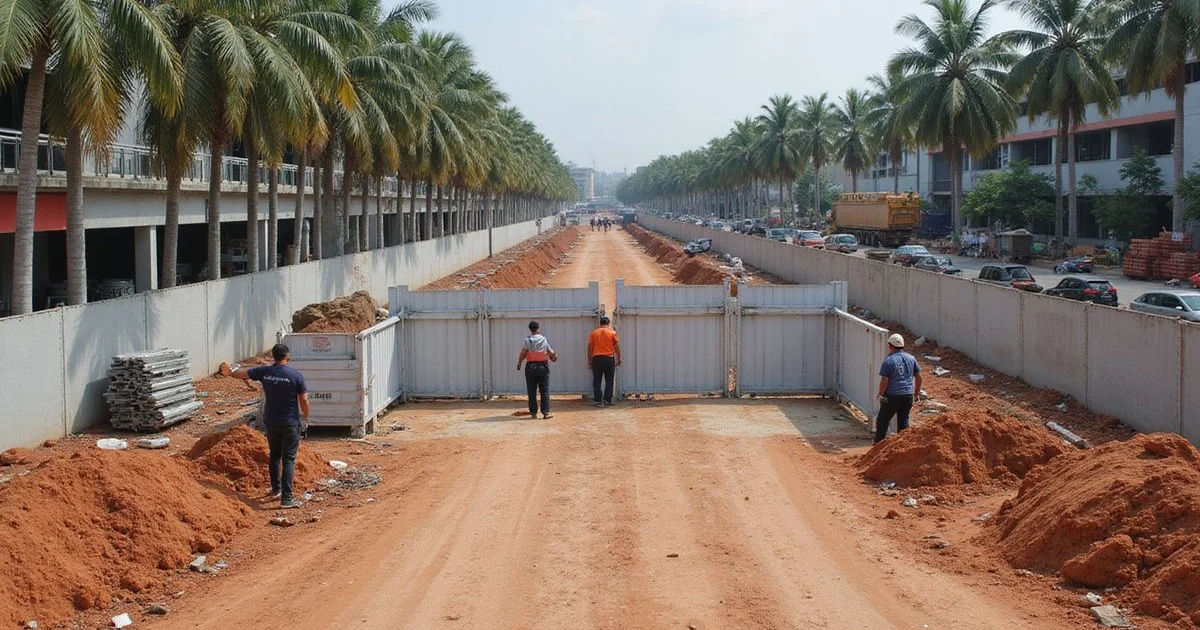
We divide the works into phases, each with a clear area, sequence and timing. Construction areas are separated from your operation with hoarding, dust screens or fencing.
The tricky moment is the tie-in, where new work joins the existing building, for example opening a wall or connecting the roof. We plan those tasks carefully, sometimes during a short planned shutdown of that one area. A US contractor, Custom Construction Services, makes the same point: phased work and clearly defined shutdown windows are what let many industrial projects continue without stopping a whole plant.
| Phase | Typical focus | What you’ll notice on the floor |
|---|---|---|
| Early | Foundations and new structure outside the existing building | Mostly outside activity, with changes to access routes |
| Middle | Roof and wall of the new section, still separated | Crane and hoist work, with exclusion zones |
| Tie-in | Opening up and connecting old and new, carefully scheduled | A short, agreed shutdown of one area |
| Final | Finishes, services connections, removal of separation | Hoarding comes down and services get connected |
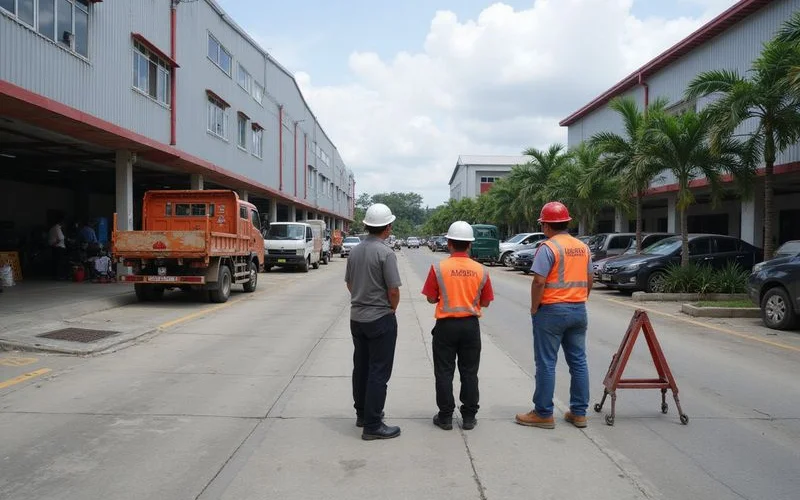
Here’s a useful tip. Factory expansion planning guides advise timing tie-ins for planned shutdowns, holidays and off-seasons. In Malaysia, that often means asking whether a Chinese New Year or Hari Raya break can host the tie-in, so the line loses little or no output.
Safety and Access
Safety comes first when construction sits next to a working factory. These are the controls we set up on every phased factory works project:
- Separate access for construction traffic and your staff and deliveries
- Marked routes and barriers so people do not wander into the site
- Controlled lifting with exclusion zones under crane and hoist work
- Fire safety, keeping escape routes and fire equipment clear at all times
- DOSH workplace safety requirements apply throughout
The legal side is worth knowing. According to law firm Skrine’s occupational health and safety review, the Occupational Safety and Health Act 1994 covers industries including both manufacturing and construction, so your team and ours fall under the same Act. The New Straits Times reported that the amended Act took effect on 1 June 2024, with the maximum fine for violations rising to RM500,000.
Our guide on Bomba, DOE and DOSH requirements covers the wider safety picture.
Noise and Dust
Some noise and dust is unavoidable, so we plan for it. The approach is simple:
- Noisy work scheduled with your team
- Dust screens near sensitive areas
- Clean-up built into each phase
Noise matters for your staff as well as your neighbours. Under Malaysia’s 2019 noise exposure rules, the workplace limit is an average of 85 dB(A) over an 8-hour day, down from 90 dB(A) under the old 1989 regulations. Breaking out concrete or cutting cladding near an occupied bay can use up that allowance fast, which is why we schedule it away from your busiest shifts.
If your process is sensitive to dust or vibration, tell us early so we can plan around it. Coating lines, packaging and precision machining are typical examples.
Share your production schedule
Knowing your busy periods, quiet shifts and sensitive areas lets us plan the noisiest and most disruptive work for the least disruptive times.
Communication During the Works
Good communication keeps both operations running smoothly. You get a named contact, regular updates and advance notice of anything that affects your floor. Changes to the plan are agreed, not imposed.
Here’s what that looks like in practice:
- A named contact you can call when something comes up
- Progress updates on what’s done and what’s next
- Advance notice of a tie-in or service shutdown
- Agreed changes rather than surprises
Canadian contractor GTA General Contractors lists clear communication protocols alongside separation, controlled access and shutdown planning as the basics of building next to active manufacturing. We agree with that. A tie-in that surprises your supervisor costs more than the tie-in itself.
Planning Before Work Starts
Everything that affects your operation is agreed before construction and written into the quotation. That way, everyone knows what to expect. The quotation covers:
- The phasing and the order of works
- Access routes for crews, staff and deliveries
- Working hours, including any quiet periods
- Who is responsible for what
Approvals belong in this early planning too. Malaysian factory approvals guide FactoryHub lists council building plan approval as a requirement before construction or extensions, and fire installation drawings go to Bomba before the work starts. The same guide advises buyers and tenants to ask for proof that every extension was approved, so a clean paper trail protects your resale or rental value later.
For what drives the cost of this type of work, see what affects the cost of a factory extension.
Planning a factory renovation during operation or a new bay beside your existing line? Send us your production calendar and a rough layout. We’ll map out the phases with you, so construction next to your operating factory stays predictable.