
The Hidden Cost of Split Storage
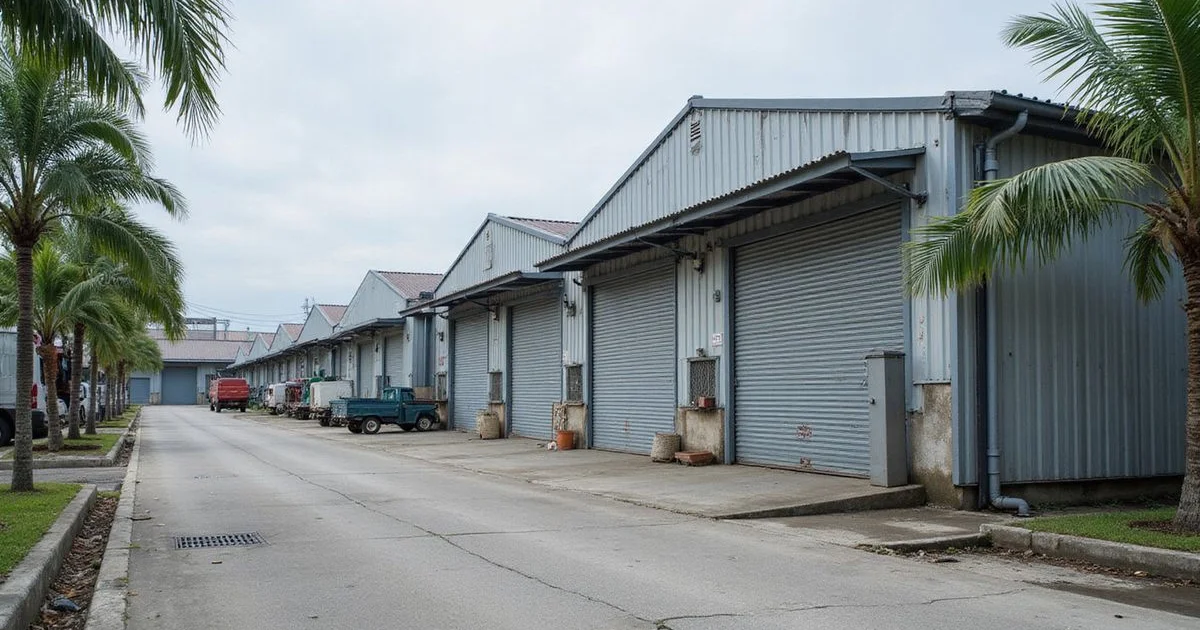
Most trading and distribution companies grow one rented unit at a time. A second unit down the road, then a third across town. Each move made sense when it happened.
But split storage costs more than the rents suggest. Extra handling, shuttle trips, duplicated staff and stock that is hard to track rarely show up on one invoice.
We’re Factory Builder Malaysia, the factory and warehouse building arm of QDB Ventures Sdn Bhd, a Cheras-based contractor that builds in Selangor. This guide covers the build own warehouse vs rent question the way we talk it through with SME owners who already hold industrial land.
The market adds pressure. JLL Malaysia expected rents in Greater Kuala Lumpur to rise in 2025, helped by new high-spec buildings, although some landlords of older warehouses trimmed rents to keep tenants. In Klang, FactoryHub’s listings show a median asking rent of about RM1.85 psf a month, with the middle half of listings between RM1.20 and RM2.20.
If your goods sit in several units, it’s time to compare that with one warehouse built for your operation. Below, we cover the running costs, what your own building gives you, the land and timing questions, and a short checklist to help you decide whether to consolidate your warehouse. For the building itself, see our warehouse construction service.
Operating Costs of Split Storage
Split storage adds five recurring costs, and most of them sit outside your rent line.
- Double handling: goods moved between units before dispatch, which means more labour and more chances of damage
- Transport: shuttle runs between sites, with lorry, driver, fuel and tolls on every trip
- Staffing: supervisors and forklift drivers at each site
- Stock control: more errors and slower picking across locations
- Rent and service charges: paid on several units, often for space that does not fit your racking
Lease paperwork multiplies too. FactoryHub’s tenancy guide puts stamp duty at RM3 per RM250 of one year’s rent on 1 to 3 year leases, and you pay it on every lease. It also notes that standard practice is a 3-year base term with renewal options, a deposit of two to three months’ rent plus a utilities deposit, and reinstatement clauses. In plain terms, you may have to strip out the racking you installed when you leave.
Here is a simple illustration. Three rented units totalling 30,000 sq ft at the Klang median of RM1.85 psf cost about RM55,500 a month, or roughly RM666,000 a year. That is rent alone, before any shuttle runs or duplicate staff. Swap in your own figures.
What Your Own Warehouse Gives You
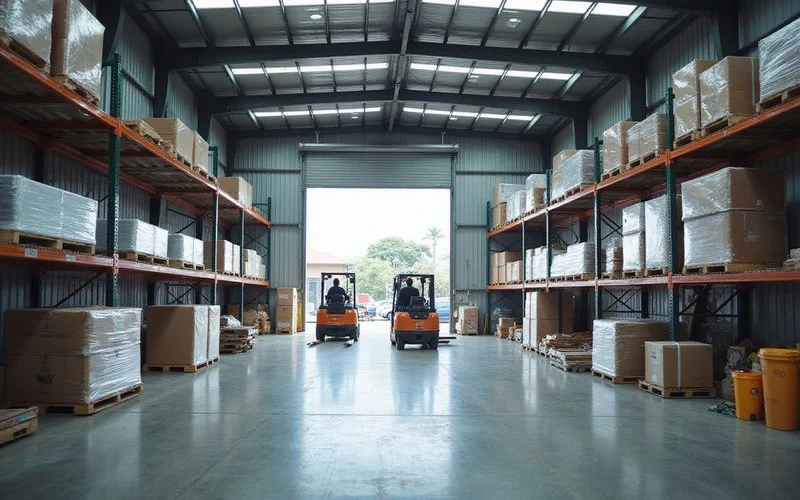
A warehouse built on your land is designed around your goods and vehicles, not a landlord’s standard unit. Four things change straight away:
- Height set for your racking, not a landlord’s standard unit
- Floor loading designed for your racking and forklifts
- Loading bays sized for your fleet and movements
- Layout that follows your goods flow from receiving to dispatch
Good specs do exist in the rental market, but you pay for them. A 59,024 sq ft light industrial warehouse in Port Klang, listed on FactoryHub in December 2025, has a 36ft ceiling and 2.9 tonnes per sq m floor loading. Its asking rent is RM2.21 psf, about RM130,248 a month, well above the Klang median. If your racking needs that kind of spec, rent premiums are the price of not owning.
You also own the asset, and you decide when and how to extend.
| Factor | Several rented units | Own warehouse |
|---|---|---|
| Handling | Goods moved between sites | One flow, one site |
| Height and floor | Landlord’s standard | Designed for your racking |
| Loading | Shared, often limited | Bays for your vehicles |
| Lease terms | Typically 3-year terms, reinstatement at exit | No landlord, no reinstatement |
| Flexibility | Easy to add or drop units | Fixed site, planned growth |
| Capital | Low upfront | High upfront |
On capital, you already hold the biggest piece. FactoryHub’s listings show a median asking price of about RM138 psf for industrial land in Klang. At that level, one acre (43,560 sq ft) is worth roughly RM6 million, and that is money you don’t need to find again.
Add up the shuttle runs
Owners are often surprised when they total the transport and double handling between rented units over a year. Pull twelve months of lorry costs, driver overtime and forklift hours between sites, then add them to your rent.
Land and Timing
You need suitable industrial land with the right zoning, enough area for the building plus yard and setbacks, and access for your vehicles. Our guide on building a factory on your land explains what to check.
Start with three quick checks:
- Zoning: confirm industrial use is allowed on your land and by your local council
- Area: allow for the building, the yard and the setbacks required under the Selangor Uniform Building By-Laws 1986
- Access: make sure container lorries can reach the site and turn inside it
Timing matters too, and so does budget: our guide to warehouse construction cost in Malaysia explains what drives the price. Building takes longer than signing another lease, so plan around your lease end dates. Include your target start date in the brief.
Most industrial leases in Malaysia run for three years with an option to renew, according to FactoryHub. Check your notice periods now, and ask each landlord whether a short extension is possible in case the build runs late.
A Decision Checklist
Consolidating into your own warehouse is worth a serious look if you tick two or three of these:
- Your goods are in three or more locations
- Racking does not fit the height of your rented units
- Loading is slow because of shared or unsuitable docks
- Leases end within a similar window, so renewals reset your rent all at once
- You own, or can buy, suitable industrial land
For the wider choice between renting, buying and building, read build, buy or rent a factory.
If you’re stuck on build own warehouse vs rent, send us your land location, racking height and target start date. We’ll talk through whether one warehouse in Selangor makes sense for you, starting from our warehouse construction page.